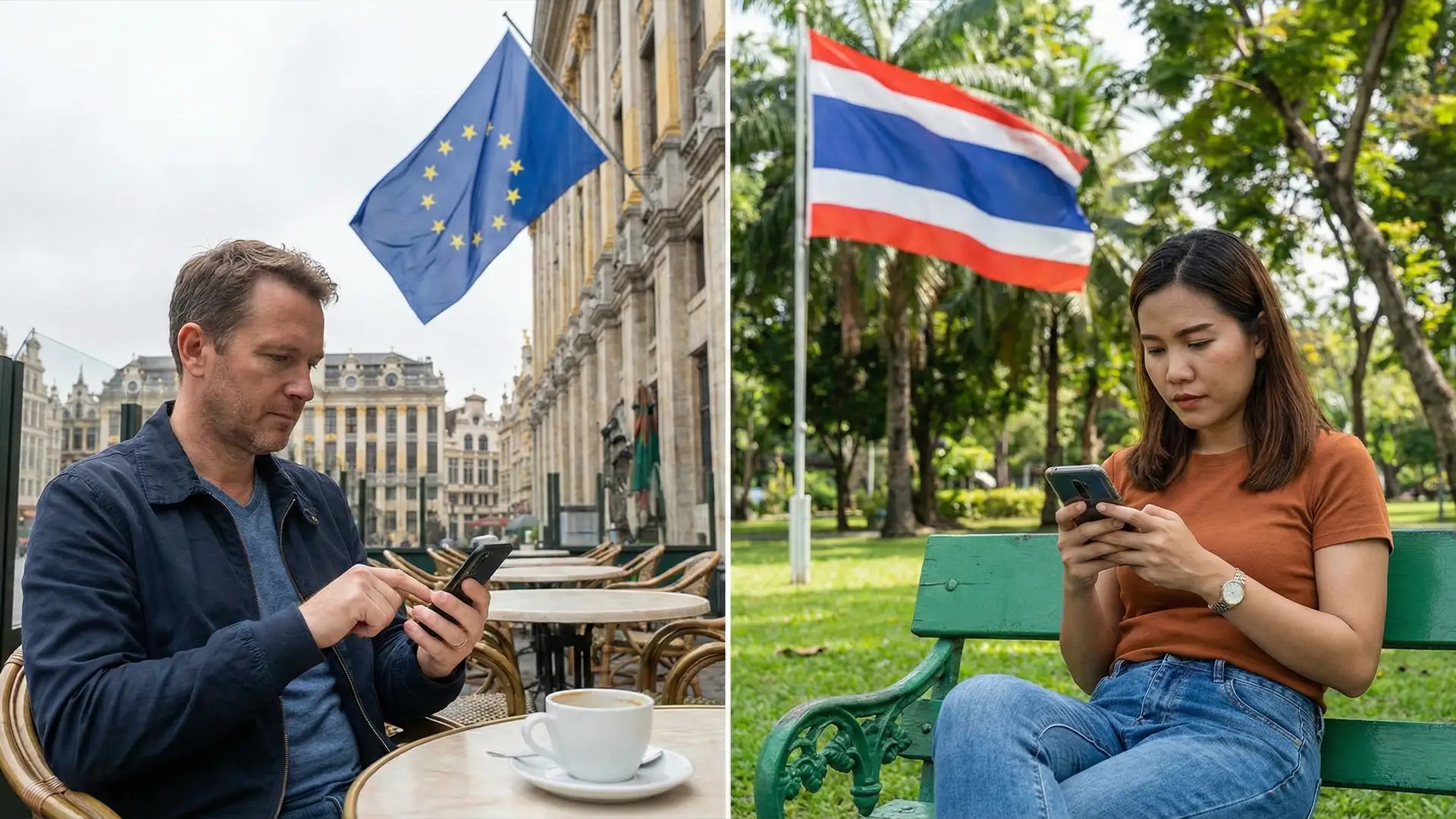
Online relationships are no longer unusual. Many European–Thai couples meet through social media, dating apps, or mutual online communities and build a genuine connection long before meeting face to face. But when it comes to a Schengen visitor visa, one question causes serious anxiety:
Can a visa be approved if you’ve never met in real life?
The honest answer is: yes, it is possible, but it is more difficult, and how you present the relationship matters more than anything else.
Why embassies are cautious about online-only relationships
Embassies are not against online relationships. What they are against is risk. From their perspective, never having met in person raises questions such as:
- Is the relationship genuine or superficial?
- Is this just a convenient excuse for travel?
- Is the applicant likely to overstay?
So the burden shifts: You must prove credibility without physical history. This doesn’t make approval impossible, it just means structure and evidence become critical.
What embassies really look for in these cases
When there are no shared trips or photos together, embassies focus heavily on:
- Consistency of the story
- Depth of communication
- Long-term intent
- Realistic, logical plans
They want to see that the relationship didn’t appear overnight and isn’t based on vague promises.
How to present a strong relationship without meeting yet
If you’ve never met in person, you must compensate with clear, organized proof. What helps most:
1. A clear relationship timeline
Explain:
- When and how you met online
- How communication developed over time
- Key moments (daily contact, serious discussions, planning the first meeting)
Dates matter. Vagueness hurts credibility.
2. Real communication, not screenshot chaos
Random screenshots don’t help much on their own. What works better:
- Selected chat excerpts that show continuity
- A short explanation of what those chats represent
- Evidence of daily or regular communication over months
The goal is to show normal couple behavior, not just volume.
3. Proof of intention to meet
Embassies want to see that the relationship is moving forward. Strong supporting elements include:
- Planned first meeting (with realistic dates)
- Flight reservations (even tentative)
- Accommodation plans
- A clear explanation of why this visit matters now
This shows progression, not stagnation.
Why structure matters more than emotion here
One of the most common mistakes couples make is relying on emotional language. Statements like: “We love each other very much” mean very little without structure. Embassies are not evaluating feelings, they are evaluating logic and plausibility. That’s why a well-structured relationship presentation often makes the difference between rejection and approval.
The Solution: Automated, Embassy-Standard Visual Proof
In online-only cases, a highly structured relationship evidence dossier is your only defense. However, manually pasting chat screenshots and call logs into Word or Canva is a massive risk. It looks disorganized, invites formatting errors, and frustrates consular officers who are forced to guess your timeline.
You need to present a clear, undeniable narrative. This is exactly why we built the Relationship Album Builder inside SabAI.
Instead of fighting with messy templates, simply upload your raw chat logs, video call screenshots, and digital milestones. SabAI’s layout engine automatically generates a clean, chronological, A4 PDF timeline that meets strict consular standards. Furthermore, SabAI’s AI consultant will draft the perfect Relationship Letter to logically explain your online history without relying on dangerous, purely emotional language.
Be honest about the challenge
It’s important to be realistic:
- Yes, not meeting yet makes the application harder
- No, it does not automatically mean rejection
What matters is how seriously and transparently you handle the situation. Trying to hide the fact that you never met is a mistake. Explaining it clearly and confidently is the right approach.
Final thoughts
You can get an EU visa even if you never met in real life, but only if:
- Your relationship is real and consistent
- Your story is clear and logical
- Your evidence is structured, not emotional
Online relationships are no longer rare. But poorly presented online relationships still fail. The difference is not love, it’s preparation. If you want to strengthen your application, focus on clarity, structure, and honesty. That’s what embassies actually respond to.